.svg)


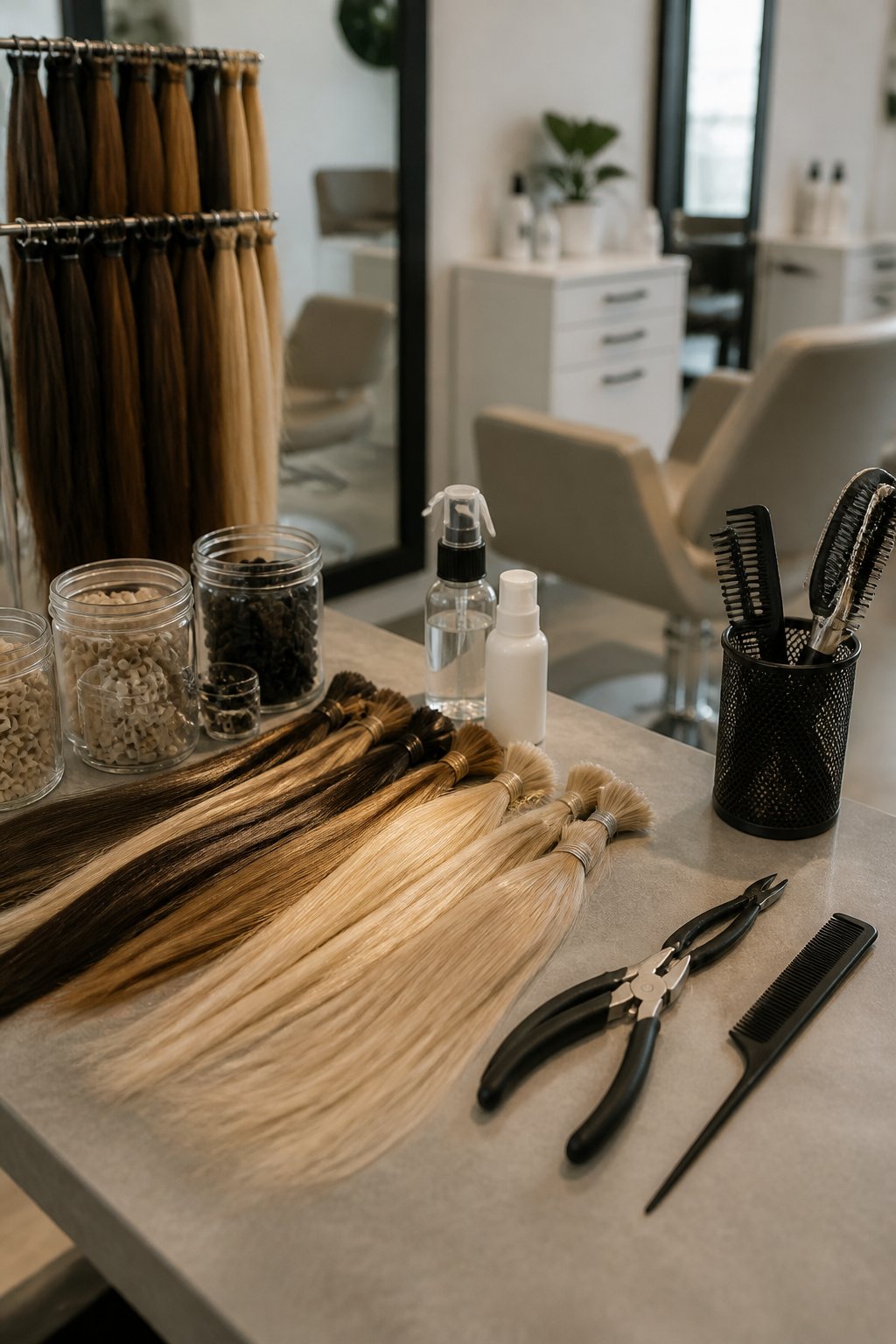
Table of Contents
- Why Clients Seek a Amanda Moncur Salon for Extensions
- Professional Hair Extension Methods Compared Side by Side
- The Healthiest Hair Extension Method for Your Natural Hair
- Best Hair Extensions for Thin Hair: What Actually Works
- Transparent Pricing and Total Cost of Ownership
- Hair Extension Maintenance Schedule and Removal Risks
- How to Evaluate an Extension Provider Before You Book
- Conclusion: Choosing Your Salon
- Frequently Asked Questions
Last Updated: October 8, 2026
Why Clients Seek a Amanda Moncur Salon for Extensions
Searching for extensions usually starts with one of two problems: the method you want isn't offered, or the result didn't hold up the way you expected.
Here's the part most guides skip. An extension result depends far less on the brand name on the packaging than on three things: the method chosen for your hair type, how the rows are placed, and who maintains them afterward. Bangin Extensions for extensions isn't really a brand swap. It's a method and provider decision.
That distinction matters because the extension category is crowded and confusing. Walk-in chain salons, independent stylists, and online weft retailers all sell "extensions," but they deliver very different things.
Professional Hair Extension Methods Compared Side by Side
Professional hair extension methods fall into four main families: hand-tied wefts, tape-ins, K-tips (also called keratin or fusion bonds), and sew-ins. Each attaches differently, lasts a different length of time, and suits a different hair type. Most guides stop at a one-line description. The comparison below goes further, because the details that actually decide whether you love or regret your install are installation time, maintenance cadence, longevity, visibility, and how each method behaves on fine versus thick hair.
Method | Install Time | Wear Time Between Moves | Total Longevity With Reuse | Visibility at the Root | Best Hair Type | Maintenance Cadence |
|---|---|---|---|---|---|---|
Hand-tied weft | 2-4 hours | 6-8 weeks | 9-12 months with re-tightening | Very low; lies flat against the scalp | Fine to medium density | Move-up every 6-8 weeks |
Tape-in | 1-2 hours | 4-6 weeks | 6-9 months; panels usually replaced | Low, but panels can show on very fine hair | Medium density, low-commitment clients | Move-up every 4-6 weeks |
K-tip / fusion | 3-5 hours | 3-4 months | 9-12 months with re-bonding | Moderate; individual bonds can be felt | Medium to thick density, color work | Re-bond every 3-4 months |
Sew-in | 3-5 hours | 6-8 weeks | 6-8 weeks per install; hair reusable | None; foundation is braided | Thick, coily, or textured hair | Tighten every 6-8 weeks |

Hand-Tied Wefts, Tape-Ins, K-Tips, and Sew-Ins
Hand-tied wefts are sewn onto a beaded row of your own hair. They lie flat, move naturally, and are the go-to for clients who want density without bulk.
Tape-ins sandwich a thin strip of your hair between two adhesive panels. They install in one to two hours and are easy to remove, which makes them a reasonable first extension for someone testing the waters.
K-tip extensions, sometimes called fusion or keratin bonds, attach strand by strand with a heat-activated bond. They allow precise color placement and blend beautifully, but a rushed install can create tension points that pull at the root.
Sew-ins, including the full sew-in and closure styles, braid your natural hair into a foundation and sew wefts onto it.
How to Read the Comparison Table
The table is not a ranking. It is a decision map. If your priority is the least visible attachment and you have fine hair, hand-tied wefts win on both counts. If your priority is a low-commitment trial, tape-ins win on install time and removal ease. If your priority is color precision and the longest stretch between appointments, K-tips win.
The mistake is choosing a method because it is the one your stylist happens to offer. A provider who only installs one method will recommend that method for every head of hair, which is why the next section on provider evaluation matters as much as this one.
The Healthiest Hair Extension Method for Your Natural Hair
The healthiest hair extension method is the one that never bonds adhesive directly to your strands and keeps tension evenly distributed. For most clients with fine or previously lightened hair, that means hand-tied wefts.
Why? Two reasons. First, no glue or heat bond sits on your hair shaft, so there's nothing to rip out at removal. Second, a beaded row spreads weight across a wider section of scalp instead of concentrating it at individual points.
That said, "healthiest" is not universal. If your natural hair is thick and coily, a properly installed sew-in can be equally protective because it tucks your ends away entirely. The real risk factor isn't the method name. It's whether the stylist respects your hair's limits.
Best Hair Extensions for Thin Hair: What Actually Works
The best hair extensions for thin hair are hand-tied wefts placed in fewer, well-spaced rows, paired with a color and texture match that blends rather than contrasts. Thin hair punishes heavy installs, so restraint wins.
A few practical rules we follow:
- Use fewer, wider rows instead of many narrow ones to spread weight.
- Match density to your natural hair, then add fullness gradually over visits.
- Choose a texture close to your own so blending hides the attachment points.
- Keep the length within a few inches of your natural length for the first install.
Clients often ask for maximum length and volume on the first appointment. That's the fastest route to visible bonds and stressed roots. Building density over two or three visits gives a result that looks natural and protects the hair underneath.
Transparent Pricing and Total Cost of Ownership
Most extension quotes you will see online list a single number for the install and stop there. That number is not the cost of extensions. It is the first line item of a year-long budget, and the difference between the two is where clients get surprised.
A full-year extension budget has four components:
- The hair itself. Hand-tied wefts and K-tips are typically reusable across multiple installs, which spreads the hair cost over nine to twelve months. Tape-in panels are usually replaced at each move-up, so the hair cost recurs more often.
- The initial installation. This is the number most quotes show you. It reflects the method, the amount of hair needed to reach your density goal, and the length you choose.
- Move-up or re-tightening appointments. Hand-tied wefts and sew-ins need attention every six to eight weeks. Tape-ins need it every four to six weeks. K-tips need re-bonding every three to four months. Each appointment is a separate charge, and skipping them is what causes damage, not savings.
- Removal and a hair health check. A removal appointment before each reinstall protects your natural hair and is not optional if you want to keep wearing extensions long term.
Because the hair cost recurs at different intervals depending on the method, the method with the lowest install quote is often not the lowest annual cost.
The honest way to compare providers is to ask for a twelve-month estimate in writing, broken out by the four components above. A provider who can produce that estimate has thought about your hair over a year, not just your appointment on Saturday.
For current pricing on our extension services, see the Amanda Moncur Salon pricing page, where our packages are listed transparently.
Hair Extension Maintenance Schedule and Removal Risks
A realistic maintenance schedule is the difference between extensions that last and extensions that damage. Most methods need attention every 4-8 weeks, and skipping those appointments is where problems start.
Here's a workable rhythm:
- Daily: Brush from the ends up, and keep heat tools off the bonds.
- Every wash: Use a sulfate-free cleanser and condition mid-length to ends.
- Every 4-6 weeks: Return for a move-up or tighten.
- Every 2-3 months: Full removal and a hair health check before reinstalling.
Removal risk climbs sharply when extensions stay in too long. Adhesive bonds can harden, and grown-out rows pull at the root. A provider who insists on a removal appointment, rather than letting you "see how long they last," is protecting your hair.
How to Evaluate an Extension Provider Before You Book
Evaluating an extension provider comes down to four checks: method range, placement skill, hair health philosophy, and aftercare support. A provider who passes all four is worth the premium.
Run through this before you book:
- Do they offer more than one method, or push a single option for everyone?
- Can they show before-and-after photos of clients with your hair type and texture?
- Do they assess your natural hair health before quoting?
- Is there a clear removal and move-up schedule in writing?
- Do they explain aftercare and product use, not just sell the install?
A provider who only offers one method is a red flag. Different hair needs different approaches, and a stylist who can't adapt is likely to force your hair into a method that doesn't suit it.
Conclusion: Choosing Your Salon
Finding a Salon for extensions is really about finding the right method and the right hands, not the right brand. Hand-tied wefts, tape-ins, K-tips, and sew-ins each solve a different problem, and the healthiest choice is the one matched to your natural hair.
At Amanda Moncur Salon, our Master Hair Extension Specialist builds each extension plan around your hair health first, using a collaborative team model and structured stylist training to keep results consistent. We start with a consultation, recommend the method that fits your density and goals, and map out the full maintenance schedule.
Book online with Amanda Moncur Salon and get an extension plan built for your hair, not a template.
Frequently Asked Questions
What is the best quality hair extension brand?
Quality depends on the method and the provider's technique more than the brand label alone. Hand-tied wefts and K-tip extensions using 100% Remy human hair tend to last longest and blend most naturally. Ask your stylist which brand they carry, whether the hair is Remy or non-Remy, and how many wears the weft is rated for. A skilled install matters as much as the hair itself, so prioritize a provider with extension-specific training and a portfolio of before-and-after photos.
What is the healthiest type of hair extension?
Hand-tied wefts and tape-in extensions are generally considered the healthiest options because they distribute weight evenly and require less tension at the root. K-tip and fusion methods use heat or keratin bonds that can stress fine or compromised hair. If your natural hair is already damaged, a sew-in with a protective braid base or a low-tension hand-tied weft gives the scalp a break. Your stylist should assess your density and hair health before recommending a method.
Which hair extension method is best for thin hair?
For thin or fine hair, hand-tied wefts and tape-in extensions usually work best. Hand-tied wefts sit flat against the scalp and can be customized in width, so they add fullness without visible bulk. Tape-ins are lightweight and lay flush, making them a good fit for fine strands. Avoid heavy fusion or wide wefts that pull on fragile roots. A consultation with a stylist who specializes in thin hair will confirm which method protects your density long term.
How often do professional hair extensions need maintenance?
Most extension methods need a move-up or re-tape every 6 to 8 weeks as your natural hair grows. Hand-tied wefts can often go 8 to 10 weeks between appointments. Tape-ins typically need re-taping every 6 to 8 weeks. K-tip and fusion extensions may last 3 to 4 months before removal and reinstall. Following a consistent hair extension maintenance schedule protects your natural hair and keeps the install looking fresh between visits.
How do you choose between hand-tied, tape-in, and other extension methods?
Start with your hair type, lifestyle, and budget. Hand-tied wefts suit clients who want maximum fullness and can commit to longer appointments. Tape-ins work well for fine hair and clients who want a quicker install. K-tip and fusion methods offer the most natural movement but cost more and take longer to install and remove. Bring reference photos to your consultation and ask your stylist to walk through the trade-offs for your specific hair density and daily routine.


