.svg)


Table of Contents
- Why Professional Precision Cutting for Fine Hair Makes a Difference
- Essential Tools for Precision Cutting Fine Hair
- Step 1: The Precision Haircut Consultation
- Step 2: Sectioning and Tension Control for Fine Hair
- Step 3: The Blunt Cut for Fine Hair: Technique and Angles
- Best Haircuts for Fine Hair: Choosing the Right Shape
- How Often to Trim Fine Hair to Maintain Precision
- Conclusion
- Frequently Asked Questions
Last Updated: October 17, 2026
Why Professional Precision Cutting for Fine Hair Makes a Difference
Fine hair has fewer strands per square inch, and each strand is smaller in diameter. That means every cut shows. A ragged edge or a heavy layer can make fine hair look thin, stringy, or flat within days. At Amanda Moncur Salon in South Jordan, UT, we treat professional precision cutting for fine hair as a structural job, not a styling one. The cut decides how the hair falls, how long it holds shape, and how thick it looks.
Here is the part most guides miss: fine hair is not weak hair. It is simply less forgiving. A precise line gives it weight and body. A careless one drains both. Precision cutting is the practice of cutting with controlled tension, clean angles, and section-by-section accuracy so the shape grows out cleanly instead of collapsing.
Essential Tools for Precision Cutting Fine Hair
The right tools do most of the work for fine hair. Sharp shears matter more here than on thick hair, because a dull blade pushes and folds fine strands instead of slicing them cleanly. A folded strand cuts unevenly and springs back with a frayed end.
A working precision kit includes:
- Sharp professional shears for clean blunt lines
- Thinning shears used sparingly, never on the ends
- Fine-tooth cutting comb for even tension
- Sectioning clips that hold without creasing
- Water spray bottle to keep tension consistent
- Wide-tooth comb for detangling before you start
Skip the razor on fine hair. It creates wispy, tapered ends that read as thin. Skip heavy texturizing too. Fine hair needs weight at the perimeter, not holes punched through it.
Step 1: The Precision Haircut Consultation
A precision haircut consultation is a short, focused conversation before any hair is cut. It sets the shape, the length, and the limits. For fine hair, this step prevents the most common mistake: cutting too much and losing the body the client actually wanted.
We ask three things in every consultation:
- How does your hair behave on day two and day three?
- Where do you want volume, and where do you want it flat?
- How much time will you spend styling it?
Then we look at growth patterns, cowlicks, and density at the crown and hairline. A stylist's guide to hair density and texture from the American Academy of Dermatology is a useful reference for understanding strand thickness. The answers shape the plan. A client who air-dries needs a different cut than one who blow-dries daily.
Step 2: Sectioning and Tension Control for Fine Hair
Tension control is the difference between a precision cut and an approximate one. Fine hair shifts when you comb it. If you cut one section dry-tensioned and another loose, the finished line will not match.
Section cleanly and keep tension even:
- Divide hair into four working quadrants first
- Take subsections no wider than the comb
- Comb each subsection flat and hold it at the same angle every time
- Cut with the hair damp and evenly misted, not soaking
A common mistake is over-sectioning. Too many tiny sections slow you down and invite inconsistency. Work in clean, repeatable blocks. The goal is a line that closes perfectly when the hair falls back into place.
Step 3: The Blunt Cut for Fine Hair: Technique and Angles
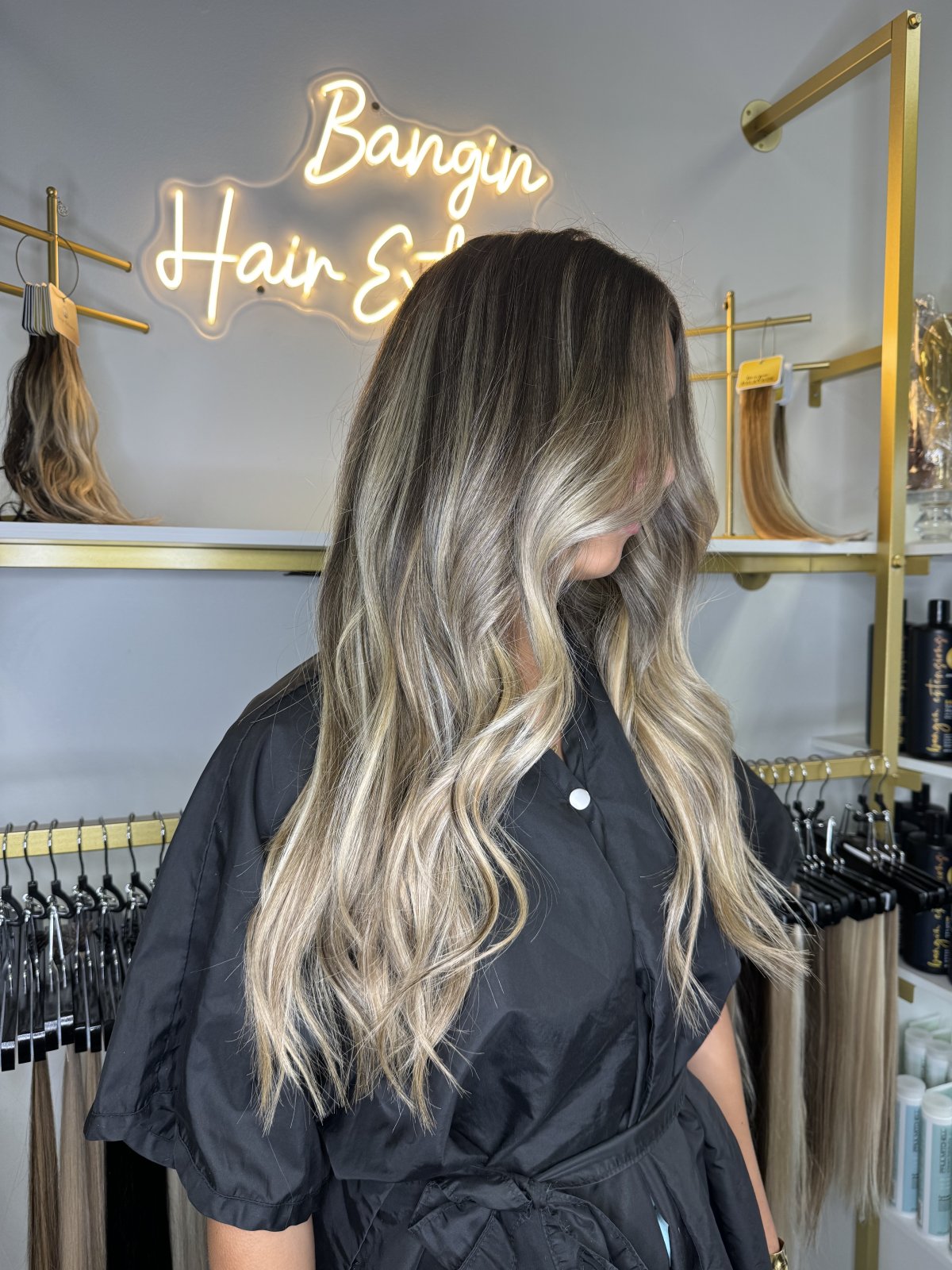
A blunt cut for fine hair is the single most effective shape for creating the look of thickness. One clean horizontal line at the perimeter makes fine hair appear denser because all the ends land at the same point. Layers, by contrast, thin the ends and reduce that effect.
The technique is simple to describe and hard to execute well:
- Comb the section flat and hold it between two fingers
- Keep the hair at zero elevation for a true blunt line
- Cut straight across in one clean motion, not in snips
- Check the line against the section beside it before moving on
Angles matter. A slight forward or backward tilt changes the whole fall. Keep the head position neutral and your body steady. The line should read level when the hair is dry and styled.
Best Haircuts for Fine Hair: Choosing the Right Shape
The best haircuts for fine hair share one trait: they keep weight where it counts. A blunt bob, a one-length lob, and a soft collarbone cut all work because they concentrate ends at a single line. Long, heavily layered cuts usually work against fine hair.
| Shape | Why It Works for Fine Hair | Watch Out For |
|---|---|---|
| Blunt bob | Dense perimeter, strong line | Needs regular trims to stay clean |
| One-length lob | Weight at the ends, easy styling | Can flatten at the crown |
| Collarbone cut | Movement with retained weight | Layers must stay minimal |
| Short pixie with a soft fringe | Lift at the root, clean edges | Grows out fast |
Face shape and growth pattern decide the final call. A stylist in South Jordan can read both in person far better than any chart. If you are searching for precision cutting near me, ask whether the stylist cuts fine hair by line and tension rather than by feel.
How Often to Trim Fine Hair to Maintain Precision
Fine hair needs a trim every 6 to 8 weeks to keep a precision shape. That is more frequent than most coarse hair needs, and there is a reason. Fine strands show split ends and lose their clean line faster, and a blunt perimeter starts to look soft within weeks.
Signs it is time to book:
- The ends look wispy or uneven
- The shape falls flat by midday
- Split ends travel up the strand
- The perimeter line no longer reads clean
Stretching trims past 8 weeks does not save money. It costs length, because splits climb and the stylist has to remove more. Regular trims protect the shape and the health of the hair at the same time.
Conclusion
Fine hair rewards precision and punishes shortcuts. A clean line, even tension, and a trim schedule that keeps the shape intact will do more for thickness and movement than any product on the shelf. That is the standard we hold at Amanda Moncur Salon.
Our team brings New York Fashion Week training, master-level extension expertise, and a collaborative approach to every chair. We start with a real consultation, cut with controlled tension, and teach you how to keep the shape between visits. If your fine hair has felt flat or thin, book a precision cut and see what a properly built shape can do. Book Online with Amanda Moncur Salon in South Jordan, UT and get a cut that holds its line.
Frequently Asked Questions
What is a precision haircut for fine hair?
A precision haircut for fine hair is a technique where every section is cut with controlled tension, sharp tools, and exact angles to create a clean, uniform shape. Unlike a quick trim, it removes weight strategically without thinning the ends, so fine hair looks fuller and holds its shape longer. A stylist trained in precision cutting will assess your density and growth pattern before making the first cut, ensuring the result works with your natural texture.
Should fine hair be cut blunt or in layers?
A blunt cut for fine hair is often the better choice because it creates a denser, thicker-looking hemline. Layers can add movement, but if they are too short or too deep they remove weight from the ends and make fine hair appear thinner. The key is keeping layers long and minimal, or opting for a one-length blunt cut. During a precision haircut consultation, your stylist can show you how different shapes will look with your specific hair density.
How often should fine hair be trimmed to maintain its shape?
Fine hair benefits from trims every 6 to 8 weeks to keep the ends clean and prevent split ends from traveling up the strand. Because fine hair shows damage faster than thicker textures, regular dusting or a precision cut maintains the shape and makes the hair look fuller. If you are growing your hair out, a trim every 8 to 10 weeks with only the very ends removed can still preserve length while keeping the cut looking intentional.
What should I tell my stylist when I have fine hair?
Tell your stylist about your styling routine, how often you wash, and any products you use, because fine hair reacts quickly to weight and buildup. Mention if you want more volume, a blunt cut for fine hair, or low-maintenance shape. A good precision haircut consultation includes discussing your growth pattern, cowlicks, and how much time you spend styling. Bring photos of cuts you like and be honest about what you disliked in past haircuts so the stylist can adjust the technique.


