.svg)


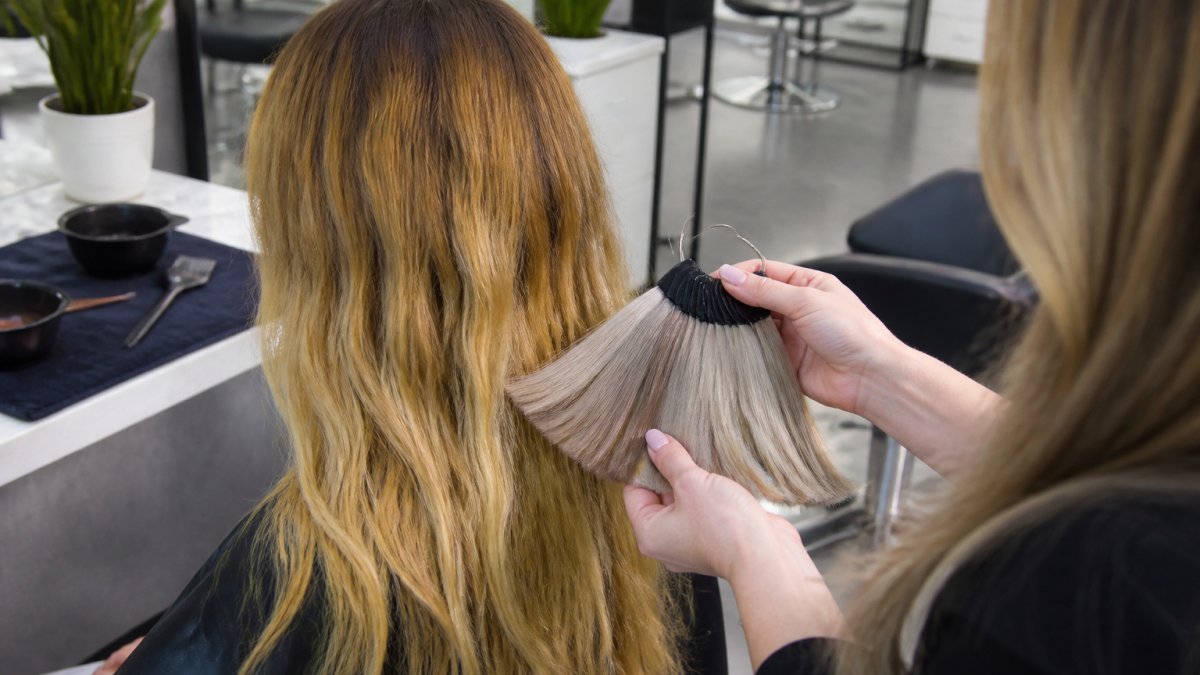
Table of Contents
- Step 1: Identify Your Brassy Tones and Hair Level
- What Color Cancels Out Brassy Hair?
- Purple Shampoo for Brassy Hair: When It Works and When It Doesn't
- Blue Shampoo for Orange Hair: Toning Warm Undertones
- How to Fix Brassy Orange Hair with Toner and Developer
- Brassy Hair After Box Dye or Highlights: What to Do
- When to See a Professional Colorist for Brassy Hair
- Frequently Asked Questions
Last Updated: October 5, 2026
Step 1: Identify Your Brassy Tones and Hair Level
Brassy hair is unwanted warm pigment, yellow or orange, that shows up in color-treated strands when dye fades or lightening exposes your natural undertones. Fixing it starts with one honest look in the mirror.
At Amanda Moncur Salon, we see this constantly: clients grab a purple shampoo for what is actually an orange problem. So diagnose first. Ask two questions:
- What color is the brass? Yellow, orange, or a mix of both.
- How light is your hair? This is your hair level, and it decides what will actually work.
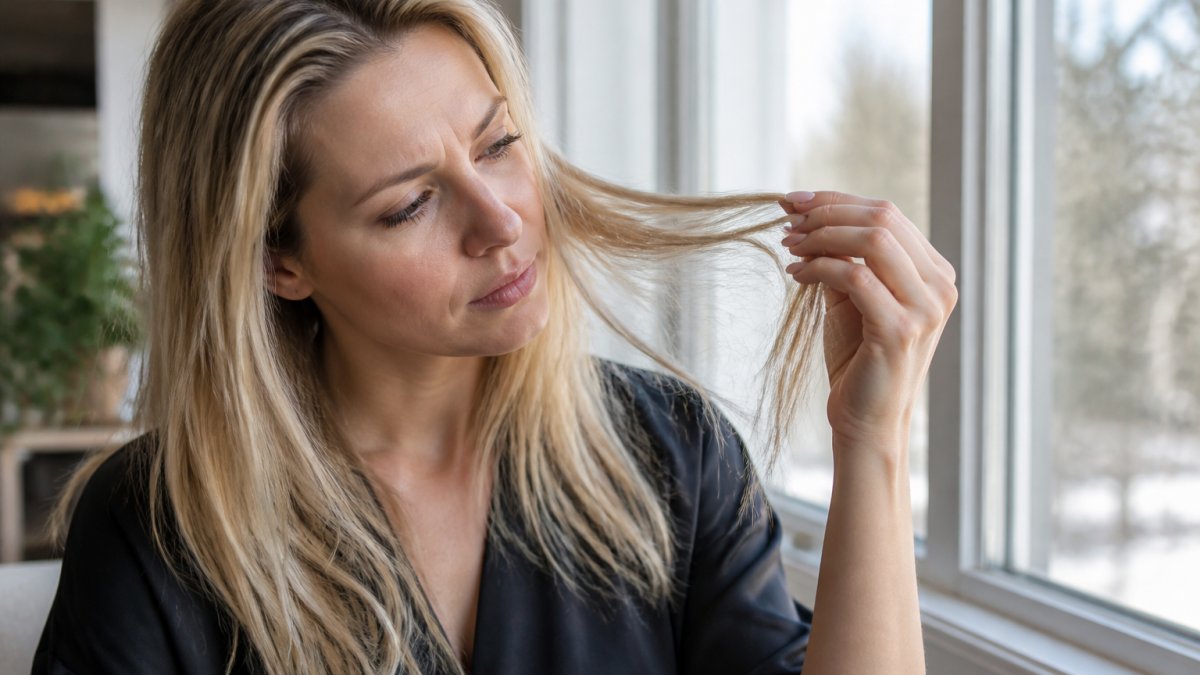
Check Your Color in Natural Light
Bathroom bulbs lie: warm lighting hides yellow tones, cool lighting exaggerates them.
Step outside at midday or stand by a window. Hold a strand against a white towel. The white gives your eye a true reference point, and the brass will jump out fast.
Check three zones separately:
- Roots, where new growth and root touch-up overlap
- Mid-lengths, where fading usually starts
- Brassy ends, the most porous and most damaged part
If the ends look darker or muddier than the mid-lengths, that signals damage, not just tone. Tone products behave differently on porous hair, so note it now.
What Color Cancels Out Brassy Hair?
The color wheel answers this in one line: opposite colors cancel each other out. Yellow sits opposite purple; orange sits opposite blue. Match the corrector to the tone you found in Step 1:
| Your Brass Tone | Canceling Color | Best Product Type |
|---|---|---|
| Yellow | Purple | Purple shampoo, purple mask |
| Orange | Blue | Blue shampoo, blue-toned toner |
| Yellow-orange mix | Blue-violet | Blue-violet toning mask |
| Very pale yellow | Light purple | Diluted purple shampoo |
A common mistake is grabbing the strongest purple product on the shelf. On light hair, an intense blue-violet can push pale yellow gray or muddy.
Start gentle. You can always build tone. You cannot easily remove it.
Purple Shampoo for Brassy Hair: When It Works and When It Doesn't
Purple shampoo for brassy hair works on yellow tones only. The purple pigment deposits on the strand's surface and neutralizes yellow, but does nothing for orange.
Use it when your hair is light blonde or highlighted and the brass reads yellow or pale gold.
How to use it without overdoing it:
- Shampoo once with a clarifying shampoo to lift product buildup
- Apply the purple shampoo to damp hair, focusing on brassy zones
- Leave it on for 3 to 5 minutes, not 20
- Rinse thoroughly and follow with a deep conditioner
Many people leave purple shampoo on too long. More pigment is not better; it is how hair turns purple-gray.
Blue Shampoo for Orange Hair: Toning Warm Undertones
Blue shampoo for orange hair targets the orange and copper tones purple cannot touch. It suits brunettes with highlights, dark hair lightened to warm copper, and anyone whose brass leans red-orange rather than yellow.
The method mirrors purple shampoo, with one change: blue pigment is stronger, so less is more.
- Start with a 2 to 3 minute leave-in time
- Watch the color as it develops, do not walk away
- Rinse the moment the orange softens
On dark hair, blue shampoo is often the only at-home option that shows real results.
How to Fix Brassy Orange Hair with Toner and Developer
Toner is the stronger tool.
Toner is a semi-permanent color that deposits corrective pigment; developer opens the cuticle so pigment can enter.
| Developer Strength | What It Does | Best For |
|---|---|---|
| 10 volume | Deposits tone, minimal lift | Blonde hair, gentle toning |
| 20 volume | Deposits tone, slight lift | Most at-home toning |
| 30 volume | Lifts color, stronger | Leave to a professional |
For most at-home toning, 10 volume is the safe pick: it deposits without lifting, exactly what brassy hair needs.
Higher developer on compromised hair causes breakage. If your hair is fragile, stay at 10 volume or skip toner entirely.
Strand Testing Before You Apply
Never apply toner to your whole head without a strand test, the single best way to avoid a color disaster.
Test like this:
- Snip a small strand from a hidden area near the nape
- Mix a tiny batch of toner and developer
- Apply to the strand and time it
If the strand looks good, proceed. If it turns gray, muddy, or uneven, adjust the shade or timing first.
Brassy Hair After Box Dye or Highlights: What to Do
Box dye and highlights fail in different ways, and the fix depends on why the warmth appeared, not just what color it is. Match your situation to the cause below; this is the step most at-home guides skip.
Identify the Cause Before You Treat It
| What You See | Most Likely Cause | What Actually Helps |
|---|---|---|
| Warmth creeps back 2-4 weeks after a fresh tone | Toner fading / color deposit washing out | Re-toning with a purple or blue gloss, then a color-safe wash routine |
| Dull, flat, slightly orange cast that builds over time | Hard-water or mineral buildup (iron, copper, calcium) | A chelating or clarifying treatment before toning, toner cannot cut through mineral film |
| Brass concentrated on the top and face-framing pieces | Sun exposure and UV oxidation | UV-protective leave-in and a hat; re-tone the affected zones |
| Orange or red that appears immediately after lightening | Underlying pigment exposed by the lift (natural pheomelanin) | Blue-based toner at the correct level, or a professional correction if it is deep orange |
| Patchy, uneven warmth with bands | Overlapping applications or uneven developer saturation | Assessment first, at-home toning usually makes banding worse |
If you cannot tell which cause applies, wash once with a clarifying shampoo and re-check in natural light. Mineral film and buildup can mimic brassiness, and one clarifying wash sometimes reveals the tone is milder than it looked.
After Box Dye
Box dye often leaves an orange or red cast because the developer lifts natural pigment unevenly, and the result depends on your starting level. A shade meant for medium brown pulls orange on darker natural hair and can go almost red on previously colored hair.
- Wait at least two weeks before any corrective service. The cuticle is still settling, and toner applied too soon can grab unevenly.
- Match the corrector to the tone: blue for orange, blue-violet for orange with red, purple only if the result reads yellow.
- Do not re-dye over it right away. Layering a second permanent color over a fresh box dye is how hair ends up darker, muddier, and harder to correct later.
After Highlights
Highlights go brassy when the toner fades and exposes the warm undertone underneath, the lightener lifted the natural pigment, leaving yellow or gold. The fix depends on how light they are:
- Pale yellow (level 9-10): a diluted purple shampoo or a light purple gloss.
- Gold or yellow-orange (level 7-8): a blue-violet toning mask, or a professional gloss.
- Orange (level 6 and darker): blue-based toner, and expect softening rather than a full cool result.
A common pattern is highlights that look fine for two weeks, then turn gold. That is the toner washing out, not new damage, a gloss every 4-6 weeks keeps the tone in place.
The Stop Sign
If your hair feels dry, gummy, stretchy, or snaps when wet after box dye or lightening, stop. That is compromised hair, not brass, and another chemical service will make it worse. Wait, deep-condition, and get it assessed before you tone.
When to See a Professional Colorist for Brassy Hair
Most brassiness can be handled at home; some cannot. Use the decision tree below before you book or buy.
The DIY-vs-Pro Decision Tree
Try at-home toning if all of these are true:
- The brass is yellow or light gold, not deep orange or red
- Your hair is a level 7 or lighter (medium blonde and up)
- Your hair feels normal when wet, no stretch, no gumminess
Book a professional if any of these are true:
- The brass is orange or red-orange, especially on level 6 or darker hair
- Your hair stretches, snaps, or feels mushy when wet
- The color is patchy, banded, or uneven
The reason dark hair is a pro job: on levels 1-5, the warmth is the underlying pigment itself, not a fading toner. No shampoo or semi-permanent toner removes it, it has to be lifted and re-toned in stages, which is a correction, not a tone.
Safety Before Any Chemical Toner
If you are toning at home, treat toner and developer like the chemicals they are:
- Patch test 48 hours before. Apply a small amount of toner and developer behind your ear or on your inner forearm, cover it, and watch for redness, itching, or swelling. Do not skip this even if you have used the brand before.
- Strand test every time. Snip a small strand from the nape, apply the mix, time it, rinse, dry, and check in natural light. If it turns gray, muddy, or uneven, adjust the shade or timing before touching your whole head.
- Keep developer at 10 volume for toning. Ten volume deposits pigment with minimal lift. Twenty volume adds slight lift and more risk. Thirty volume and up lifts color and belongs in professional hands.
What a Professional Correction Actually Involves
Color correction is a different job than toning. It means lifting out unwanted pigment and rebuilding the color in stages, sometimes across more than one appointment. A colorist will assess your hair's porosity, elasticity, and history, then decide whether to lift, fill, or tone, and in what order.
Expect a consultation and strand test first. A correction that skips the assessment is the one that fades in two weeks or damages the hair.
Aftercare: Keeping Brass From Coming Back
Once the tone is corrected, maintenance is what makes it last:
- Wash less often, two to three times a week, with a sulfate-free shampoo
- Use purple or blue shampoo once or twice a week, not every wash
- Rinse with cool water to help seal the cuticle
Frequently Asked Questions
What color cancels out brassy hair?
Purple cancels yellow, and blue cancels orange. These colors sit opposite yellow and orange on the color wheel, which is why purple shampoo and blue shampoo are the most common at-home fixes for brassy hair. For deeper or more stubborn brassy tones, a professional toner mixed with the correct developer neutralizes the warmth more precisely than shampoo alone.
Why is my hair still brassy after toning?
Toner deposits color on the surface of the hair, so it fades over time, especially with frequent washing. If your hair was lifted to a dark orange level, a single toning session may not be enough to neutralize it. Uneven porosity from highlights or box dye can also cause the toner to grab in some areas and wash out in others. A strand test and a second session, or a professional color correction, often resolves it.
Should I use purple or blue shampoo for brassy hair?
Choose based on the tone you see. Purple shampoo neutralizes yellow tones, so it suits pale blonde or lightened hair that has turned yellow. Blue shampoo neutralizes orange tones, making it the better choice for brunettes, dark hair, or anyone with orange brassy ends. Using the wrong one can leave a dull or ashy cast, so assess your color in natural light first.
When should I see a colorist for brassy hair?
See a professional if your hair is orange rather than yellow, if it feels dry or brittle, if a box dye or bleach caused the brassiness, or if at-home toners and shampoos have not worked after several tries. A colorist can assess your hair level, run a strand test, and choose a toner and developer strength that corrects the warmth without causing further damage.
Brassy hair is fixable, but the wrong product on the wrong tone wastes money and can cause damage. Diagnose the color, match it to the correct canceling shade, and test before you commit. When the brass is stubborn or your hair is compromised, our team at Amanda Moncur Salon offers expert blonding and color correction with a personalized plan built around your hair health. Book online and get a color result that actually lasts.


