


Last Updated: November 5, 2026
Quick Summary
The best salon treatment for overprocessed hair is a bond-building treatment, which works on the internal bonds that lightening and coloring break apart. Pair it with a professional deep conditioning treatment for hydration, and add a trim to remove split ends that would otherwise travel up the strand.
- Overprocessed hair feels mushy when wet and stretches without springing back, unlike simply dry hair.
- A strand test and elasticity check should come before any lightening or corrective color service.
- Protein treatments strengthen hair but are easy to overdo, making hair stiff and brittle.
- Keratin smoothing adds shine and manageability but does not repair bonds underneath.
- Severe damage is a months-long recovery with repair services and trims across several visits.
Table of Contents
- How to Tell If Your Hair Is Overprocessed, Not Just Dry
- 1. Bond-Building Treatment for Damaged Hair
- 2. Hair Treatment for Color-Damaged Hair
- 3. Hair Breakage Treatment at Salon
- 4. Professional Deep Conditioning Treatment
- 5. Keratin Smoothing and Frizz Control
- Your Consultation Checklist: Choosing the Best Salon Treatment for Overprocessed Hair
- Booking Your Recovery Plan in South Jordan
- Frequently Asked Questions
How to Tell If Your Hair Is Overprocessed, Not Just Dry
If you are searching for the best salon treatment for overprocessed hair, start by confirming what you are actually dealing with. Overprocessed hair is hair that has lost internal structure from repeated chemical services, and it behaves differently from hair that is simply dry.
Dry hair usually feels rough and looks dull. Overprocessed hair stretches too far before it snaps, or breaks without stretching at all. It often feels mushy when wet, and the ends look lighter and more porous than the roots.
That distinction decides your treatment. A hydrating mask will help dry hair. It will not rebuild a hair shaft that bleach has broken down internally. Choosing the wrong category is the most common mistake we see, and it wastes both money and months of recovery time.
Signs of Chemical Damage vs. Dehydration
According to the American Academy of Dermatology's guidance on hair damage, chemical treatments and heat styling are two of the leading causes of structural hair damage. The signs differ enough that you can usually sort them at home.
- Wet feel: Dry Hair: Coarse, tangles easily; Overprocessed Hair: Soft, mushy, stretches oddly
- Breakage: Dry Hair: Occasional snap mid-strand; Overprocessed Hair: Breaks at the crown and mid-shaft
- Elasticity: Dry Hair: Springs back when pulled; Overprocessed Hair: Stretches then fails to return
- Ends: Dry Hair: Frizzy, rough; Overprocessed Hair: Splits, white dots, thins fast
- After washing: Dry Hair: Feels better with conditioner; Overprocessed Hair: Feels coated but still weak
Chemical damage comes from lightening, bleaching, and repeated color services. Heat damage comes from flat irons and dryers used too hot, too often. Both weaken the hair cuticle and the cortex beneath it, and both need a repair-focused plan rather than more moisture alone.
1. Bond-Building Treatment for Damaged Hair
A bond-building treatment for damaged hair is the closest thing the salon has to structural repair. These services work on the bonds inside the hair shaft that lightening and coloring break apart, which is why they sit at the top of our list for overprocessed hair.
The category is well known now, and stylists reach for it first when elasticity is gone. Wella Professionals' guide to salon treatments for damaged hair groups bond and repair services alongside smoothing options, which reflects how salons actually build a recovery plan.
Best for: hair that stretches and snaps, or feels gummy when wet. Skip if: your scalp is irritated or your hair is breaking at the root, which needs a different conversation.
2. Hair Treatment for Color-Damaged Hair
A hair treatment for color-damaged hair targets the specific wear that lightening and repeated color cause. Understanding the mechanism makes the service recommendation obvious. Lightener opens the cuticle and breaks disulfide bonds inside the cortex so dye molecules can enter; every overlapping application removes more of the lipids and protein that hold the cuticle flat.
Color damage is not one condition. It runs on a severity scale, and the right salon treatment changes at each tier:
- Mild: What you see and feel: Dull surface, slight roughness, color fades faster than usual; Salon treatment that fits: Professional deep conditioning plus a bond-building add-on inside the color service
- Moderate: What you see and feel: Mid-length porosity, tangles when wet, uneven tone, some split ends; Salon treatment that fits: Bond-repair service, protein treatment, and a trim of split ends
- Severe: What you see and feel: Gummy when wet, stretches without springing back, breaks mid-shaft, white dots at ends; Salon treatment that fits: Repair-first plan: bond repair and conditioning across multiple visits, trim what cannot be saved, and pause lightening
- Critical: What you see and feel: Breaks at the crown or root, scalp sensitivity, hair feels mushy after washing; Salon treatment that fits: No further chemical service until a stylist reassesses elasticity; focus on strengthening and trimming
This is where a strand test earns its place. Before any corrective color, a stylist should check how your hair reacts to lightening or toning. A simple elasticity check, wet a strand and stretch it gently, tells us whether the hair can take another chemical service or needs repair first.
Clients with color-damaged hair often want to know about color correction and blonding for damaged hair. That service starts with a consultation and a plan, not a bowl of bleach.
Watch out: booking a corrective color appointment without a strand test is how hair ends up more overprocessed than it started. Equally, overlapping lightener on already-lightened mid-lengths is a common cause of sudden breakage, so ask your stylist how they will avoid re-processing hair that has already been lifted.
3. Hair Breakage Treatment at Salon
A hair breakage treatment at the salon focuses on stopping loss before it spreads. Breakage is the clearest sign that overprocessed hair has moved past dryness into structural failure, and it rarely fixes itself.
Salon options include bond-repair services, protein treatments, and a trim to remove split ends that will otherwise travel up the strand. Protein treatments strengthen, but they are easy to overdo. Too much protein makes hair stiff and brittle, which is the opposite of what damaged hair needs.
4. Professional Deep Conditioning Treatment
A professional deep conditioning treatment restores moisture and softness to hair that has lost both. It is the hydration half of any recovery plan, and it pairs with bond repair rather than replacing it.
In-salon conditioning runs deeper than a shower mask because of heat, timing, and formulation strength. We use Milbon repair, moisture, and reawaken treatments for exactly this stage, and you can read more about Milbon treatments for repair and hydration before you book.
The limitation is honest: conditioning improves how hair feels and behaves, but it cannot rebuild bonds that are gone. Expect softer, more manageable hair after one visit, not a structural fix.
5. Keratin Smoothing and Frizz Control
They make hair easier to manage and add shine, which matters when damaged hair has become a daily fight.
Smoothing is not repair, though, and this is where expectations go wrong. A keratin service can make compromised hair look better while doing nothing for the bonds underneath. On hair that is already fragile, the service needs a careful assessment first.
If you want to see what smoothing looks like as a finished service, browse our smoothing treatments and ask which option suits your hair's condition.
Your Consultation Checklist: Choosing the Best Salon Treatment for Overprocessed Hair
Choosing the best salon treatment for overprocessed hair comes down to one question: what is actually broken? A consultation should answer that before anyone touches your hair with a chemical. Most guides stop at "book a consultation"; the useful part is knowing what to say and what to listen for.
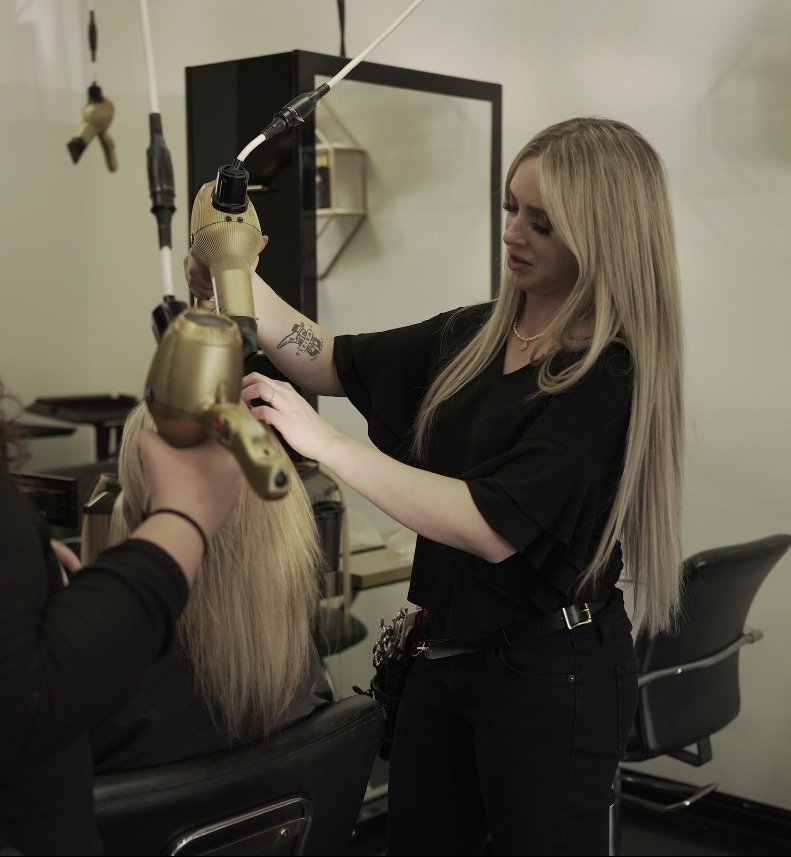
Tell Your Stylist This
Bring a short history, because the treatment plan depends on it:
- The date of your last lightening, color, or smoothing service, and whether any overlapped
- How hot and how often you use flat irons, curling irons, or dryers
- Whether your hair feels mushy when wet, snaps without stretching, or stretches and fails to spring back
- Where breakage appears: crown, mid-shaft, or ends
- Any scalp sensitivity, itching, or flaking after chemical services
- Which products you currently use, including anything labeled strengthening or reparative
Match the Treatment to the Damage Type
Use this decision guide to steer the conversation. It distinguishes the damage types competitors tend to blur together:
- Rough, dull, tangles easily but feels better after conditioning: Likely damage type: Dryness / dehydration; Salon treatment to ask about: Professional deep conditioning, hydration-focused service
- Stretches when wet and does not spring back; gummy feel: Likely damage type: Loss of elasticity from chemical processing; Salon treatment to ask about: Bond-repair service, sequenced before further color
- Snaps without stretching; stiff, brittle feel: Likely damage type: Protein loss or protein overload; Salon treatment to ask about: Protein treatment with careful dosing, or moisture if hair is stiff from too much protein
- White dots at ends, splits traveling upward: Likely damage type: Breakage and split ends; Salon treatment to ask about: Trim of unsalvageable ends plus repair service
- Frizz and rough cuticle with otherwise sound elasticity: Likely damage type: Cuticle roughness; Salon treatment to ask about: Smoothing or frizz-control service after assessment
Ask These Questions Before You Book
- Will you do a strand test and an elasticity check before any lightening or corrective color?
- Based on my damage type, is the priority bond repair, moisture, protein, or a trim?
- What can realistically improve in one visit, and what will take several months?
- If my hair cannot take another chemical service yet, what is the plan instead?
- How often should I return, and what should I use between visits?
- What signs mean I should pause coloring or heat styling?
The single most useful question is: "What would you do if this were your hair?" A stylist who answers with a plan, a sequence, and a realistic timeline is the one to book.
Realistic Outcomes and When to Pause
Treatments can improve how overprocessed hair feels and behaves, but they cannot permanently restore hair that has already been damaged. Expect softer, more manageable hair after a service, not a reversal of existing damage.
Watch out: if your scalp is irritated, your hair breaks at the root, or a strand test shows poor elasticity, the right move is to pause lightening and heat styling rather than push through another service. You can read more on why we recommend the treatments we do before your consultation.
Booking Your Recovery Plan in South Jordan
Recovery from overprocessed hair is a plan, not a single appointment. Most clients need a repair service, a conditioning service, and a trim spread across several visits, with at-home care in between. Anyone promising a full fix in one session is skipping the honest part.
If you are ready to start, review our full salon service menu to find the right treatment and schedule your consultation. We will assess your hair, explain the options, and build a plan around what your hair can actually handle.
Frequently Asked Questions
Can a salon treatment repair overprocessed hair?
Salon treatments can improve how overprocessed hair looks and feels, but they cannot reverse structural damage. The hair cuticle stays compromised, so regular maintenance appointments and at-home care are needed to keep results. A stylist can assess your damage severity and recommend the right combination of services.
How do I know if my hair is overprocessed or just dry?
Overprocessed hair usually shows breakage, split ends, and a gummy texture when wet, especially after bleaching or repeated color services. Dry hair feels rough and looks dull but still stretches and snaps back. A strand test at a salon consultation can confirm the difference. If your hair has been lightened multiple times or feels mushy near the ends, it is likely overprocessed and needs a bond-building treatment for damaged hair rather than just a moisturizing mask.
How often should you get a salon treatment for damaged hair?
Your stylist will recommend a treatment schedule based on your damage severity, how often you heat style, and whether you are continuing color services.
Should I cut off overprocessed hair or try a treatment first?
Try a treatment first if the damage is mostly mid-shaft and the ends still have some structure. A hair breakage treatment at salon plus regular trims can preserve length while you recover. If the ends are mushy, gummy, or splitting several inches up, cutting is the healthier choice because no treatment can rebuild hair that has lost its structure. Many stylists recommend a trim and seal service alongside repair treatments for the best balance.
Your hair has been through a lot, and it deserves a plan built around its health rather than a quick fix. Amanda Moncur Salon offers expert blonding and color correction, a collaborative team-based approach, and stylists trained to assess compromised hair before recommending a service. Get started with Amanda Moncur Salon and book a consultation for a recovery plan that protects the hair you have while you work toward the hair you want.
Book Online
 Add amandamoncursalon.com as a preferred source on Google →


